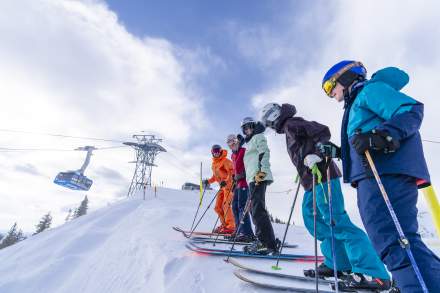
From November powder days to April corn snow, discover when to visit Salt Lake’s four world-class resorts for the best snow conditions, lightest crowds, and biggest savings.
When Is the Best Time to Ski Salt Lake?
Whether you’re chasing deep powder, avoiding crowds, or hunting for deals, here’s everything you need to know.
Our license plates don’t lie: Utah’s ski country is home to The Greatest Snow on Earth®. Only a few places on the planet rival our unique combination of quantity and quality. Through a typical winter season, the Cottonwood Canyons snaking out of Salt Lake are blasted with around 500 inches of snow annually. (We’ll do the math: That’s 40 feet, folks.) In rare blockbuster years, the totals can be mind-boggling — the 2022–23 season, for example, dumped a record-breaking 903 inches at Alta Ski Area.
By mid-season, storm after storm rolls through, layering up a deep, light, and durable snowpack. Thanks to this bounty, Salt Lake’s four world-class resorts (Alta, Snowbird, Brighton, and Solitude) deliver some of the most reliable and celebrated ski conditions anywhere. From early-season groomer days to powder days and spring’s “corn snow” mania, each part of our long November-to-April season offers its own charms.
Within that span, as snow conditions evolve dramatically, so do the overall mountain vibes. Early winter brings a festive holiday atmosphere and lots of local hype. Midwinter is the heart of the storm cycle, with powder hounds chasing each new snowfall. By spring, the pace mellows into sunny, party-friendly days filled with tailgate barbecues, pond-skimming contests, and relaxed afternoons on the deck. Here, we break down Utah’s ski season by timeframe, with key stats and tips to help you plan the perfect Salt Lake ski trip.
November-December: Early Season
In northern Utah, winter doesn’t usually turn on overnight. Instead, the snowpack builds gradually as storms come in cycles. Early-season snow is often wetter and heavier — not the ultra-light fluff Utah is famous for. But that denser stuff lays the groundwork by bonding to the ground and smoothing out rocks, and subsequent snowfalls start to pile on top. Look for consistent storms as these will help consolidate the layers. This time isn’t about perfect conditions but about the stoke for what’s to come.
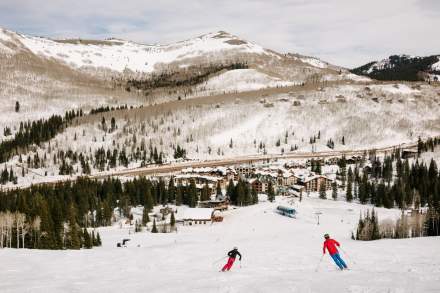
Utah ski conditions can be hit-or-miss before mid-December, but high elevations and solid snowmaking help usually guarantee a few good runs by late November. Brighton snow conditions mean lifts often spin by mid-month, and most resorts open by Thanksgiving. Terrain expands quickly from there: Alta snow conditions mean roughly 96% of runs are open by Christmas.
Early winter is a great time to snag the best deals of the season. The weeks before Christmas bring light crowds and excellent deals, and midweek is blissfully quiet. For families and newer skiers, the festive vibe may matter more than deep snow. December delivers bluebird days, holiday lights, and torchlight parades — just book early, as Christmas week is the busiest and most expensive of the year.
Early Season Summary
- Snow Conditions: Base-building snow, limited terrain early, ~96% open by Christmas
- Price: Low November and early December, peak prices during Christmas week
- Crowds: Light before holidays, heaviest Christmas week
- Vibes: High energy, festive, and family-friendly
- Local Events: Christmas light displays, including ZooLights at Hogle Zoo, torchlight parades at several resorts, and fireworks around New Year’s Eve
January - February: Powder Season
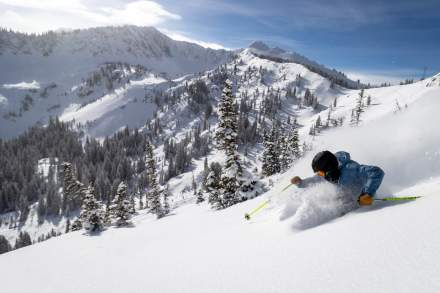
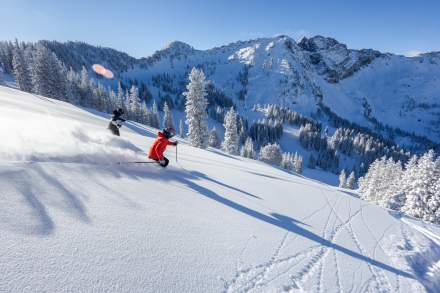
By midwinter, Utah’s snowpack really hits its stride. The storm track usually settles into a more regular pattern, delivering frequent dumps that stack up fresh powder on a near-weekly basis. With cold temperatures and shorter days, the snow stays light, dry, and fluffy on the surface — those perfect “blower” powder days that Utah is famous for. New Year’s is a riot: Alta’s mid-mountain depth averages about 77 inches in January and nearly 100 by late February. Utah gets around 24 “powder days” each season (defined as those with more than 12 inches at the resorts in one day), and most of them happen during this stretch.
Powder hounds should aim for early to mid-February, when coverage peaks and crowds spread out. That’s when the door opens and the mountains say, “Come on in, let’s party.” With a deep base and regular refills, the terrain truly opens up. Even the steepest runs are filled in, unlocking tight trees, expert chutes, and long groomers. It’s stormy, hoods are up and goggles on, and there’s a frenzied energy on the slopes.
Smart timing pays off. Once holiday crowds fade, early to mid-January is quiet and often more affordable. The big exceptions are MLK and Presidents’ Day weekends, when demand spikes. Midweek days are usually mellow, with short lift lines and fresh tracks. Just beware: after a big storm, it’ll feel like half of Salt Lake called in sick. Staying slopeside lets you skip that traffic and stack up run after run on untouched powder.
Powder Season Summary:
- Snow Conditions: Deep, dry powder refreshed by frequent storms
- Price: Affordable early January, premium during MLK and Presidents’ Day weekends
- Crowds: Light mid-January midweek, busiest holiday weekends
- Vibes: Storm-chasing adrenaline, bluebird highs, and all-time snow
- Local Events: Throughout January and February there are various music and theatrical events happening in Salt Lake, and don't forget about the annual Winter Roundup (an action-packed outdoor festival featuring live music and skijoring races).
March - April: Spring Season
By the time March rolls around, Utah’s snowpack is mature, deep, and often at its peak for the season. For example, Alta gets around 15 feet of snow in these two months alone — and Utah resorts see about 80 inches of snow in April alone. In other words, the season isn’t winding down yet; late winter and early spring can still bring plenty of surprise powder days.
Spring in Utah brings dynamic weather and steadily warming conditions. As the sun climbs higher, it softens slopes even on dry, bluebird days, especially on sunny, south-facing trails. These aspects often enter daily melt-freeze cycles by late February, creating “corn snow” — a soft, silky surface that’s a spring skiing favorite. The best days follow the sun; you might hunt steep, firm lines in the morning and lap velvety cruisers in a hoodie by afternoon.
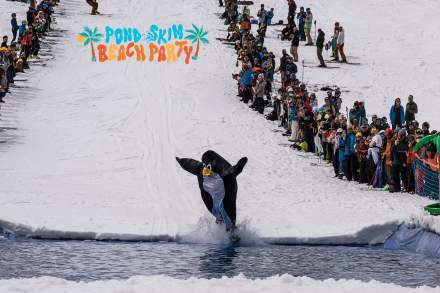
The season also brings a mood shift. As the snowpack starts thinking about retirement, crowds thin as locals turn to other sports. Resorts embrace the fun with pond skims, patio concerts, and end-of-season parties. Lift tickets and lodging often hit their lowest prices, making this sunny, laid-back stretch one of Utah’s most underrated times to ski.
Spring Season Summary:
- Snow Conditions: Deepest base of the season, frequent late storms, mix of powder and soft corn
- Price: Most affordable time of the year
- Crowds: Light, especially after spring break
- Vibes: Playful, sunny, laid-back, and party-ready
- Local Events: Alta’s Frank World Classic (costumed skiers perform outlandish tricks in a rock ’n’ roll-spirited ski party), Solitude’s Last Chance Beach Bash (pond-skimming party), sunny patio concerts, and festive closing-day events
Salt Lake Ski Travel FAQs
How much snow does Utah get, and how many powder days can I expect?
The Cottonwood Canyons near Salt Lake (home to Alta, Snowbird, Brighton, and Solitude) receive roughly 500-plus inches of snow in a typical winter — and about 24 powder days per season, defined as days with at least 12 inches of snow in 24 hours.
When should I book flights to get the best airfare for a ski trip?
For the best deals on flights, aim to book at least four weeks in advance. (Domestic flights bought more than 28 days before departure cost around 24% less on average compared to last-minute bookings.) Try to avoid peak holiday travel dates and consider flying mid-week to further lower costs.
What is the Salt Lake Ski Super Pass, and is it a good deal?
Yes! It’s an easy, money-saving way to explore multiple resorts without the hassle. The Salt Lake Ski Super Pass is a flexible lift ticket that gives you access to Alta, Snowbird, Brighton, and Solitude on one pass. Valid for three to 10 days (used anytime), it includes no blackout dates, 25% off rentals, and free UTA ski bus and TRAX transit.
Which Salt Lake-area resort gets the most snow?
Alta Ski Area is perhaps most legendary for its conditions. The resort averages around 545 inches of snow each year – over 45 feet – which is among the highest in North America. The other Cottonwood Canyon resorts, Snowbird, Brighton, and Solitude, also usually hit 500-plus inch totals. The Wasatch geography is blessed by frequent “lake-effect” snow and perfectly aligned storm tracks, delivering an abundance of powder.
How do I check current snow conditions at Salt Lake resorts?
Is there still good skiing in April? What are spring conditions like?
Yes! Utah’s ski season often runs into late-spring or early summer, and conditions can be epic. Snowfall doesn’t suddenly stop after winter; on average Utah sees about 80 inches of snow in April alone. Longer days and a higher sun angle mean you’ll get a mix of powder days and sunny bluebird days with soft “corn snow.”
What are the cheapest weeks of the ski season to visit?
If you’re flexible on timing, the second and third weeks of January are historically the least expensive for a ski vacation. Data on lodging rates shows these mid-January weeks have the lowest average nightly prices of the season. Early February is another great time--and often coincides with local happenings like the Winter Roundup, an action-packed outdoor festival with live music and skijoring races.
Plan Your Perfect Salt Lake Ski Vacation
Whether you’re chasing deep January powder, hunting spring corn snow, or looking for family-friendly holiday vibes, Salt Lake delivers world-class skiing from November through April. With four exceptional resorts just 30–45 minutes from downtown Salt Lake, you can experience everything from Alta’s legendary snowfall to Snowbird’s steep terrain, Brighton’s laid-back chill, and Solitude’s wide-open runs — all in one trip.
The best part? You don’t have to choose just one resort. The Salt Lake Ski Super Pass gives you access to all four mountains, with no blackout dates and the flexibility to ski wherever conditions are best each day. Whether you’re here for three days or ten, you’ll save money while maximizing your mountain time. Ready to experience The Greatest Snow on Earth®?