

Slow down, Salt Lake
November 2025 issue
"I feel broken every day I stay in Salt Lake City. But I still love it. The depth and texture of those feelings is the richness of this city."
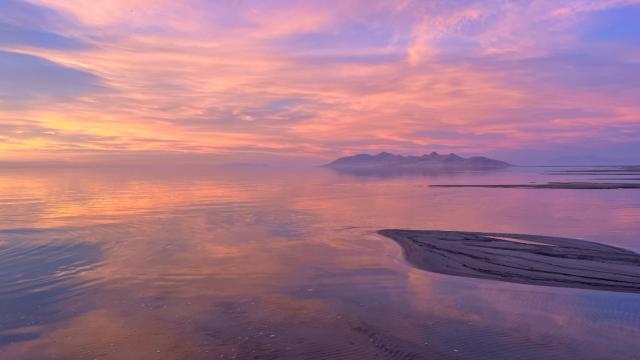
This is what American author and environmental activist Terry Tempest Williams said about Salt Lake City, where she grew up. This place, where urban development and nature conservation coexist, is a land of contradictions and coexistence. Approximately 10,000 years ago, the water that filled the city slowly evaporated under the scorching sun, and about 200 years ago, pioneers founded the city on the site of the lake. The city prospered with the Wild West, and today, its people enjoy a diverse mix of religions, cuisine, and sports. Amidst all these changes, nature has silently embraced its people.
DIVE INTO SALT LAKE CITY

From downtown Salt Lake City, a city more beautiful than heaven,
I board a car and head west. The road is Interstate 80, the second-longest interstate in the United States. Stretching from California to New Jersey, this straight stretch has a speed limit of 80 miles per hour (approximately 128 kilometers). It's also the second-fastest highway in the United States, after Texas. It takes about an hour and a half to reach our destination, the Bonneville Salt Flats. As time passes, the honking of city horns and trams fade away, leaving only the 1980s music emanating from our guide, Blake, a self-proclaimed old-time pop enthusiast. Between upbeat funk and dreamy synth-pop, the scenery feels like a step back in time.
The downtown buildings passing by outside the car window are replaced by smelter smokestacks built in the aftermath of the late 19th-century gold rush. Beyond the horizon stretches the Wasatch Range, named after the Shoshoni chief who signed a peace treaty with the settlers (his portrait can still be easily seen on streetlights downtown). The diverse landscape of Salt Lake City unfolds like a panorama, with phragmites, a reed that thrives in salty environments, hillsides lined with traces of water that once filled this area with water 11,000 years ago, and the salty lake itself.
“You might see wildlife along the way, but what I’m really looking forward to is aliens,” Blake says with a laugh. The nearby Dugway Proving Ground, more than five times the size of Seoul, is a prime example. He points to the undisclosed military base, dubbed “Utah’s Area 51,” and hints that many, including himself, suspect it might have alien ties. “Unfortunately, I haven’t seen a UFO yet, but if you spot any sparkling objects in the sky during today’s tour, please let me know quickly.”
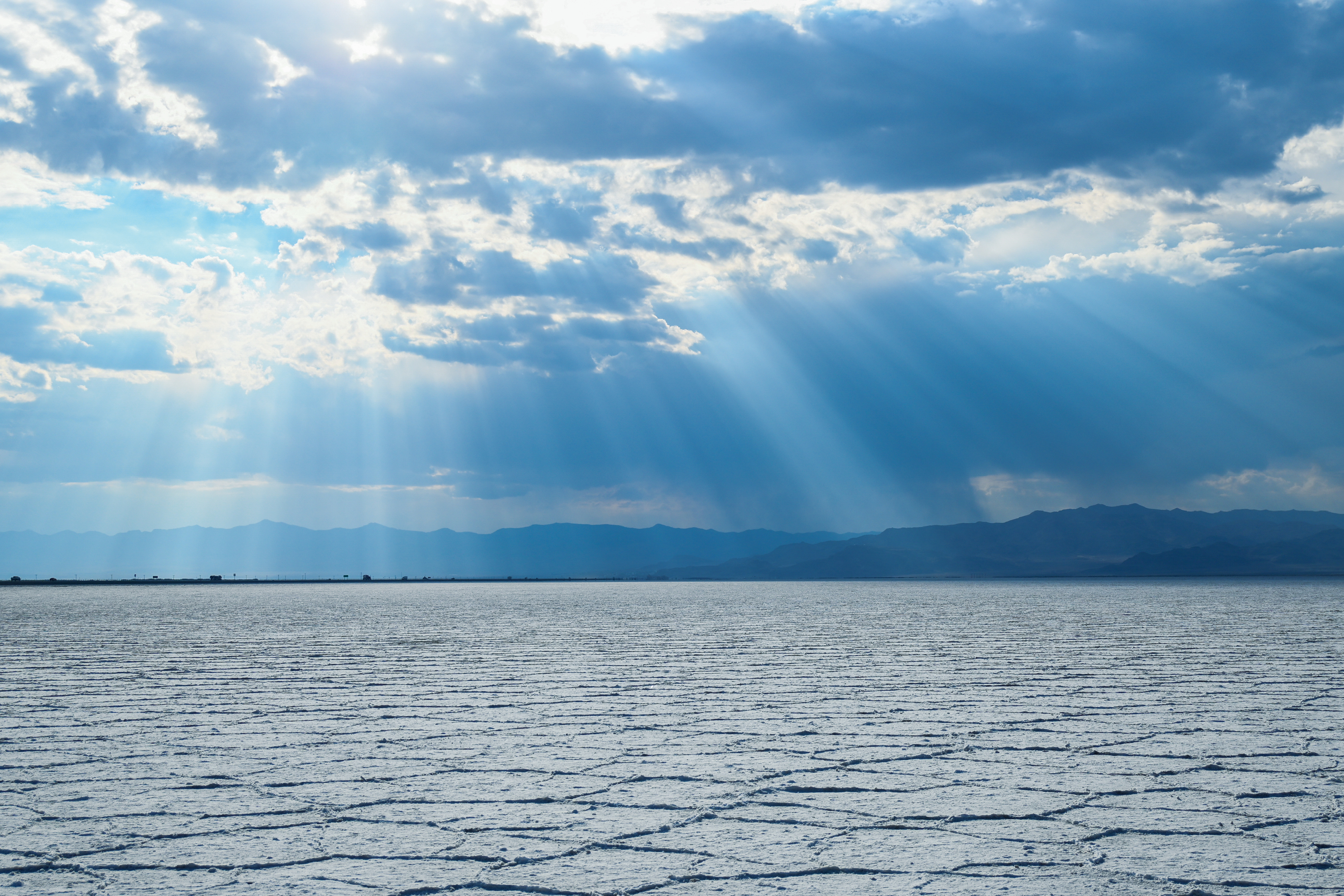
After he finishes speaking, I stare out the window for a while, and a blindingly bright light pours down. I squint my eyes and peer through the light, not at an alien UFO, but at a white plain reflecting the sunlight. With 178 million tons of salt and an area of 260 km², it’s hard to imagine its scale alone.
“It’s a serious optical illusion here. The mountains over there look within reach, but they’re actually far away. They’re flat and devoid of wildlife, so you lose your sense of perspective. You have to be careful, as some people lose their sense of distance and end up lost.” Perhaps it’s Blake’s words or the surreal landscape that makes my steps unsteady. In the movie “Pirates of the Caribbean: At World’s End,” it was said to be a place for the dead. If there’s a paradise above the clouds, it must resemble this place, with sunlight pouring down on the pristine white ground. I walk step by step through the salt flats.
Approximately 10,000 years ago, a massive freshwater lake from the Ice Age dried up, leaving behind salt deposits that formed the Bonneville Salt Flats. Some cautiously walk, examining the hexagonal patterns created by the water's drying waters, while others enjoy the freedom of running across the white earth. Each person explores nature, embracing time, in their own way.
On the way back to downtown Salt Lake City, they encounter a massive tree sculpture towering over the salt flats. Created by Swedish artist Kal Momen, the 27-meter-tall . symbolizes the emptiness of humanity, infinitely small in the vastness of nature, and the vitality preserved within nature. Blake, who was explaining the story contained within the tree, observed the weary travelers dozing off one by one after another. He paused, turning up the volume. The song he chose was "Goodbye Stranger" by the British rock band Supertramp. "Goodbye, stranger. It was great meeting you. I hope you find your own paradise." The lyrics sound like the vast nature of the Bonneville Salt Flats greeting a departing traveler.
An Island Filled with Life
"Now, everyone, raise your thumbs and make a 'top' gesture. Keep your arms straight. If your thumbs completely cover the bison's torso, you're at a safe distance," explains our guide David, pointing to two bison in the distance as soon as we enter Antelope Island State Park. He adds that if the bison snort, glare, or raise their tails, we should quickly retreat.
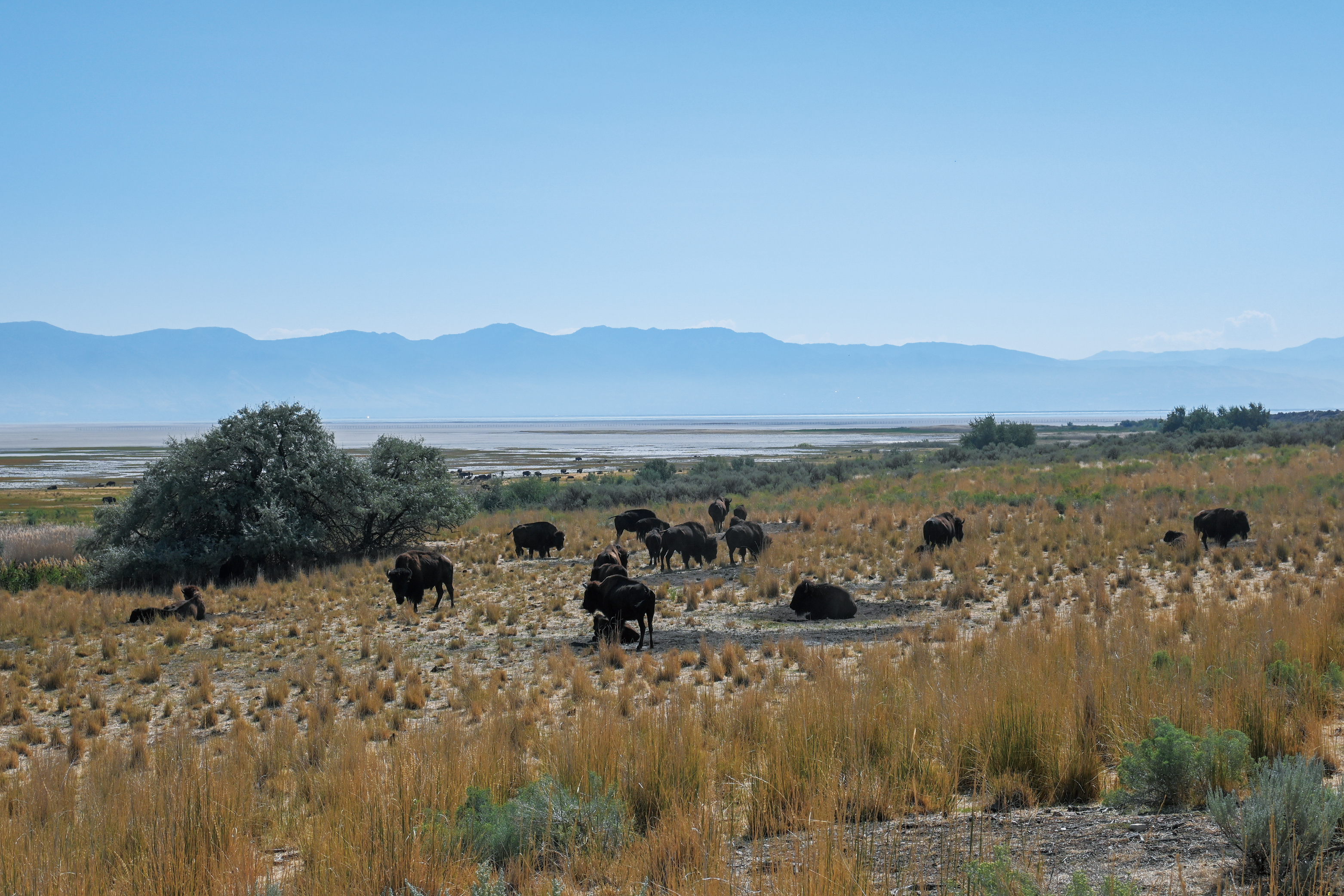
The star of Antelope Island is undoubtedly the bison, a massive, short-furred buffalo. Once native to North America, they were endangered in the late 19th century due to railroad construction and urban development. To prevent this, twelve bison were brought to the island for protection in 1893, and their population has now grown to around 700. Other inhabitants include the island's namesake, the pronghorn antelope, and the long-eared jackrabbit. The Great Salt Lake, surrounding the island, is a lake with a salinity of around 12%. Now, the water level has dropped, so antelopes often escape the island on foot.
To get a closer look at the island's landscape, I follow David up the Buffalo Point Trail on the north side of the island. It's a short 1.7km round trip, but the slope is steep and the dirt and rocks make it slippery. As you slowly ascend, keeping your eyes on the ground, you'll soon reach the summit, where your view is unobstructed. You'll be greeted by a panoramic view of Antelope Island, home to a herd of bison, the Great Salt Lake, and smaller islands across the lake, including Stansbury Island. In this landscape where time seems to slow down, only large birds soar above. "Over 250 species of birds live here. While there's no fish in the lake, the birds enjoy brine shrimp, a favorite food source. Peregrine falcons are said to have the fastest descent of any bird."
While the north side of the island is a natural setting, the south side holds the stories of the people who live within it. Fielding Garr Ranch, a ranch established by settlers who arrived on the island in the 19th century, still retains its original brick building, built in 1848, as well as its stables and blacksmith shop. Now preserved as a historic site, horses still frolic in the stables. Experience ranch life, touch vintage farm equipment, and even pretend to be a cowboy by throwing a rope to a wooden horse, gradually immersing yourself in the past of Antelope Island.
Singing the history of the city,
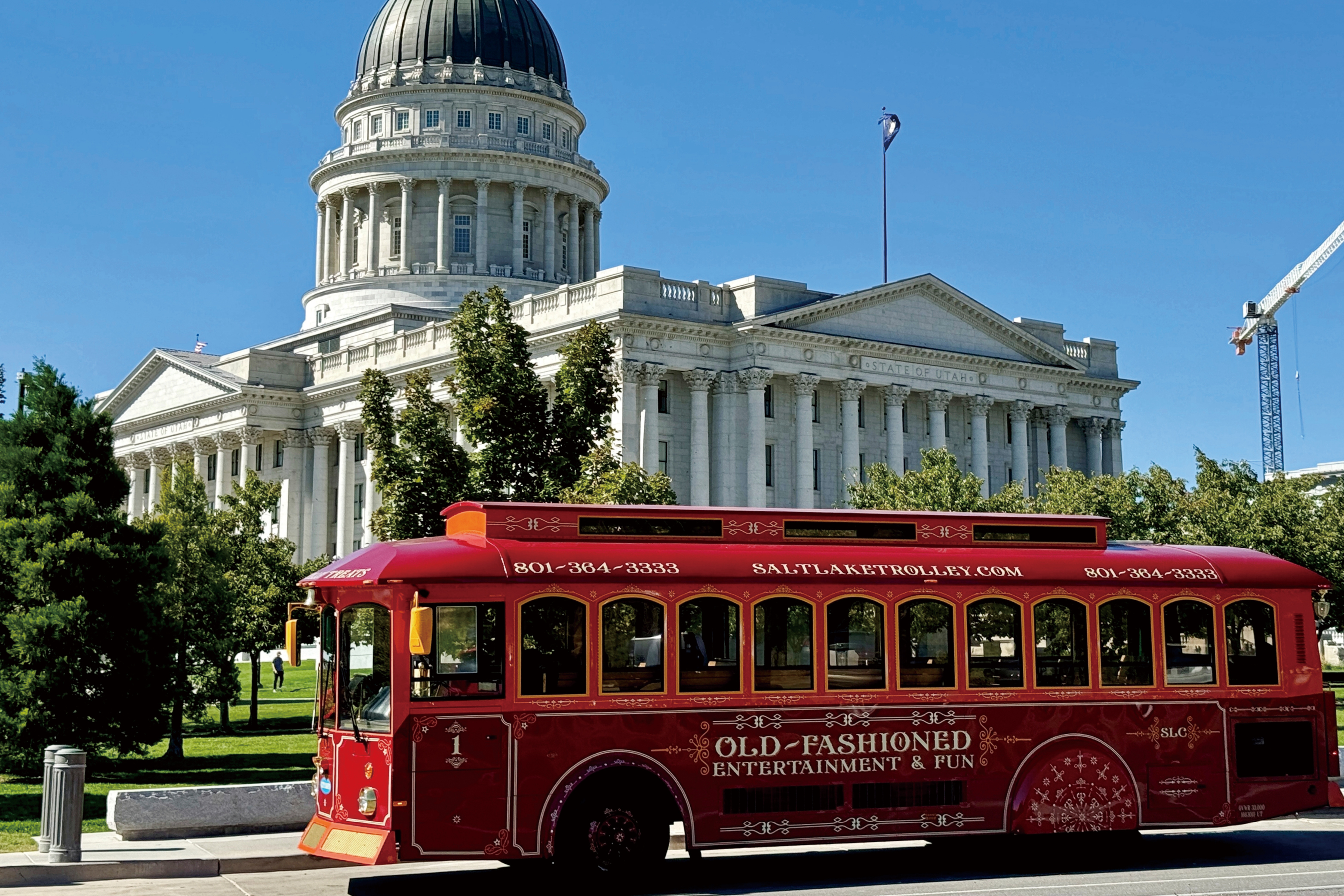
we board a red bus, a replica of an early 20th-century streetcar that ran through the city. Soon, two guides, Luke and Kaley, board, dressed in pioneering attire: bonnets, lace dresses, red vests, and fedoras. We thought it was just a bus tour of the city, but they start singing and dancing, playing small harps. Then they shout, "This is the place! Keep going!"
The tour is officially called the "Trolley Show Tour." Using Salt Lake City as a stage, the guides unravel the city's history through acting and song. The tour opens with the words of Brigham Young, the city's first settler. A successor to Joseph Smith, founder of the Church of Latter-day Saints, he settled this land with his followers and formed a friendship with the local Ute Indians. The Utes called themselves Utah, meaning "people of the mountains." "Salt Lake City is 1,280 meters above sea level, so for today, you're in Utah."
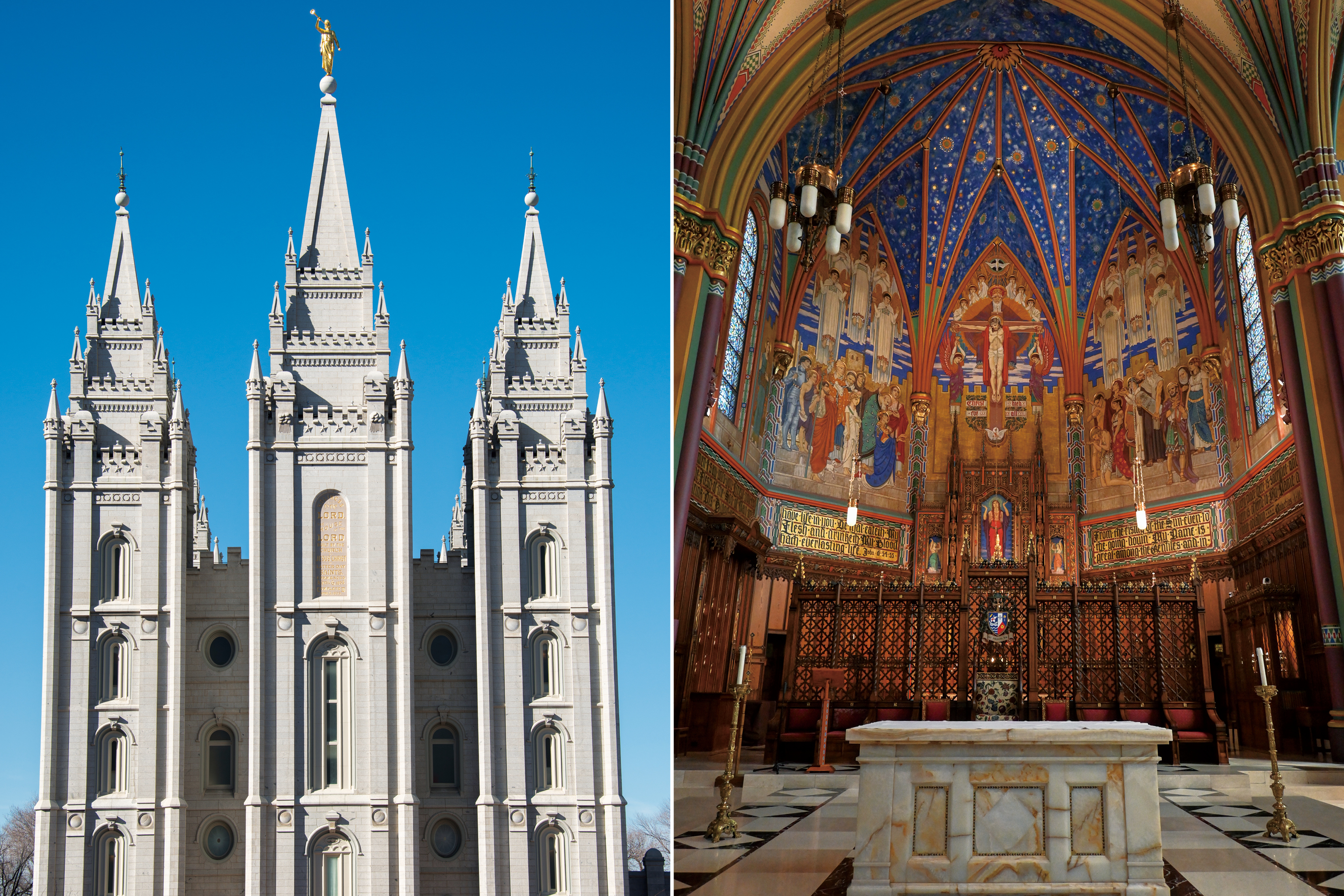
Outside the window, Temple Square, the LDS Church's temple, unfolds majestically. Construction began in 1853 and took 40 years to complete, this stone building blends Gothic and Romanesque styles. It also houses the Cathedral of the Madeleine, sometimes called the Notre Dame of Salt Lake. Its construction was influenced by England's Carlisle Cathedral. Unlike Temple Square, which is open only to Catholics, anyone can enter and tour, regardless of whether they're Catholic. Stepping inside, you're greeted by stained glass windows and impressive murals. The quiet space is filled with the faint sound of someone praying.
Afterwards, the trolley tour guides transform into various characters to provide an engaging account of the city's history. The tour also features miners who displayed their power by building a city hall larger than Temple Square; Walt Disney, inspired by the city's first train station, the Union Pacific Depot, who created Disneyland's train station; and, returning to modern times, film music maestro John Williams, who composed "Call the Champions," the theme song for the 2002 Winter Olympics. As you pass the seagull sculptures scattered throughout the city, you'll also hear the legend of how the seagulls swept in and devoured the desert locusts that were disrupting the pioneers' farming.
The tour's final stop, akin to a time travel tour, is the Utah State Capitol, built in 1916 in the Classical style with a massive dome. On the second floor, the vast dome and ceiling are illuminated with murals overhead, telling the stories you've heard along the way, from the pioneers who arrived in Salt Lake City to the miraculous geese that performed miracles.
Unlike trolley tours, where you hear about history
from locals, walking tours delve deeper into the daily lives of locals. Michelle, dressed as an explorer and wearing a jungle hat, checks the participants' health before embarking on the walk. "You're probably coming from near sea level, right? We're at about 1,200 meters above sea level. Altitude can affect you, so it's important to balance 'walking and resting.'"
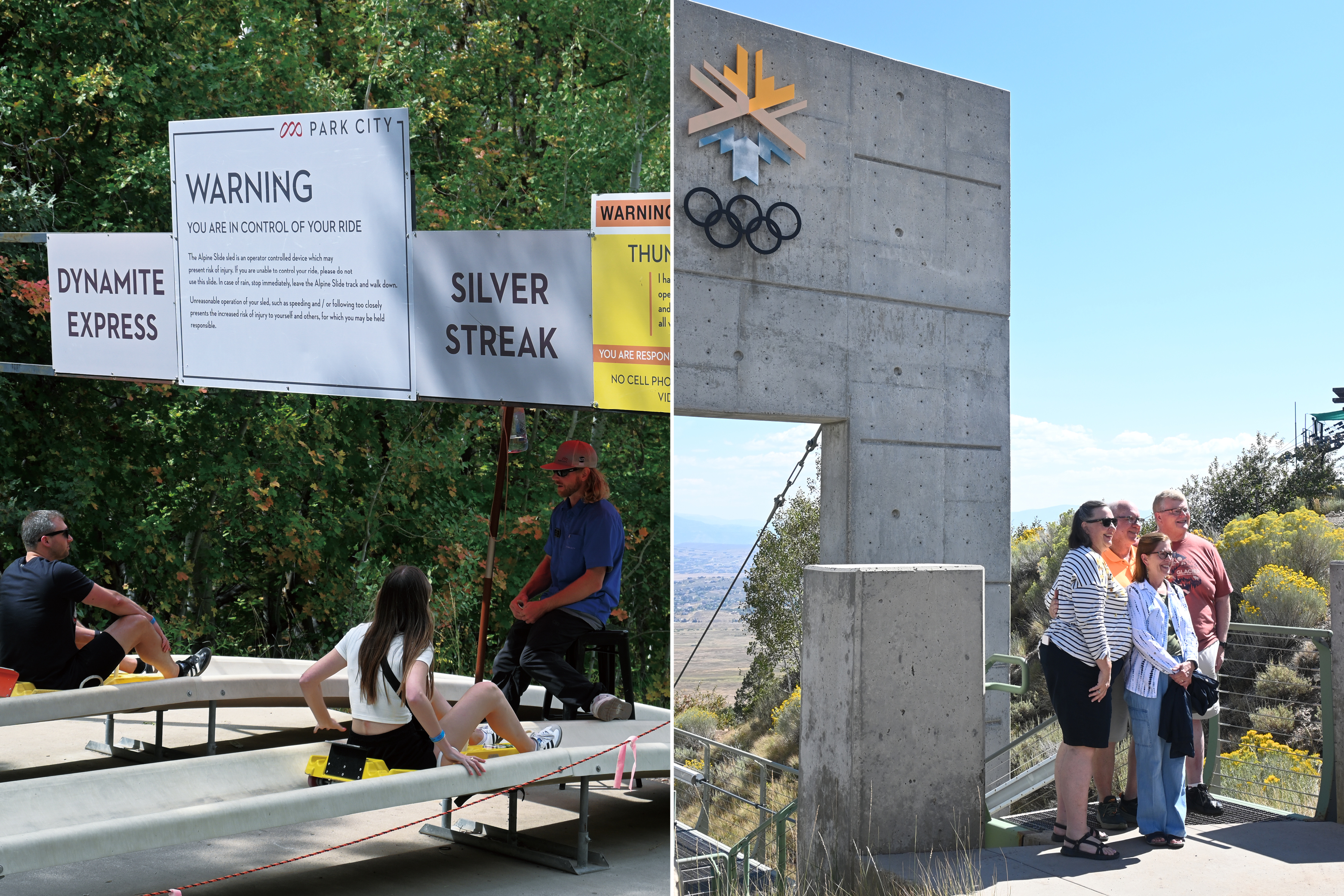
Follow her through the city, gathering hidden gems of history. Traces of the 2002 Winter Olympics remain throughout downtown Salt Lake City. These include the athletes' village hotel and tram line built for the Games, the medal ceremony space now a parking lot, and the giant arrowhead sculpture bearing the Olympic logo. Donated by the Japanese watch brand Seiko to commemorate the Games, it was used to count down to 1,000 days before the Games. "See the tram tracks right next to us? While we were building the tram for the Olympics, we discovered artifacts from the Fremont Tribe. One of them, an arrowhead, inspired the sculpture." The clock will also play a similar role in the countdown to the upcoming 2034 Salt Lake City Winter Olympics. Temple Square, which we briefly glimpsed during the trolley tour, was undergoing renovations after the 2020 earthquake damaged the building. It's scheduled for completion in 2027. "The interior of the temple is only open to the public for six months after completion. Please come back then," Michelle said. I look forward to seeing Temple Square in its full glory.
September in Salt Lake City is chilly in the mornings and evenings, but temperatures soar above 30°C during the day. Furthermore, the high altitude makes the sun's UV rays intense, making it scorchingly hot. After a long walk, it's time to find some "balance." We head to the Union Pacific Railroad Station for a rest and conclude our tour. Now operating as the Asher Adams Hotel, the space is filled with vestiges of its former train station life, including a shoeshine chair and arched windows. Sitting on the lobby sofa, a mural painted high on the wall almost reaching the ceiling catches the eye. It's an oil painting by artist John MacQuarrie, capturing the moment when the transcontinental railroad was completed. A few people sit at the old ticket booth, now a bar, savoring the memories of the space.
Just a 40-minute drive from Salt Lake City, a dry desert city nestled deep in nature,
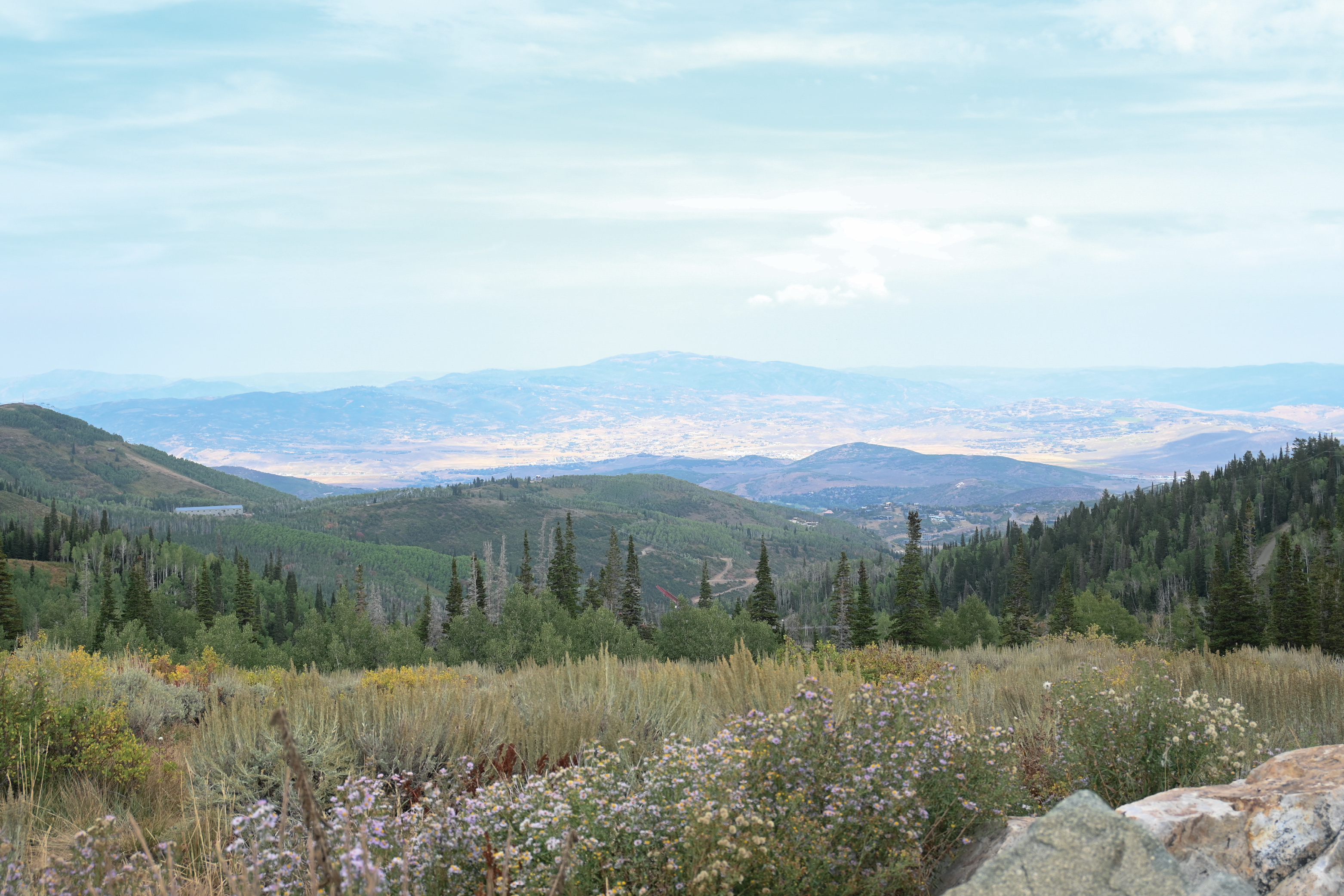
the first thing you notice upon arriving in Park City is the change in the air. Located at the foot of the Wasatch Mountains in northern Utah, the city's average elevation is about 2,100 meters. This is about 1,000 meters higher than Salt Lake City, making the midday heat feel noticeably different, and the air crisper. Park City boasts numerous ski-in/ski-out resorts, allowing guests to access the slopes directly from their rooms. While ski season might be packed with visitors in thick ski gear, we visited the city just as summer transitioned into fall. The snow-free mountains were adorned with lush trees. Throughout my journey to Park City, I was excited to see what the city would reveal. The words of Abby Romm, my guide for the Antelope Island tour from Salt Lake City, kept coming to mind. "Salt Lake City is great, but Park City is truly captivating. Even people who live here often go there on weekends to enjoy the outdoors. I think everyone loves it."
It didn't take long to discover Park City's charm. The city's constant presence of a towering mountain is enough. Even when it doesn't snow, the city's mountains are brimming with activities. Park City Mountain Resort, which operates over 330 ski runs in the winter, becomes a playground for other activities in the summer when the snow melts. Mountain bikers can tackle the slopes, zipline across the mountain ridges, and enjoy the thrill of speed regardless of the season. To console myself
for missing out on skiing, I take the chairlift up to the Alpine Slide. On the 900-meter-long course, I hear the scraping sound of the sled, feel the wind in my hair, and see the Wasatch Mountain scenery change with each curve. The next activity is the mountain coaster, which winds through the mountain. Descend the track, which preserves the elevation difference, at speeds of up to 40 km/h. As you navigate the fine line between thrill and safety, your brakes grip the ground, allowing you to fully experience the Park City seasons.
A vibrant city
: “It’s been over 20 years since the Olympic flame was extinguished, but all the facilities are still functioning,”
explains Annie, a guide at Utah Olympic Park, as she gazes at the steep ski jump and winding bobsled track in the distance. This was a key venue for the 2002 Salt Lake City Winter Olympics, which helped establish Park City’s reputation for winter sports. The bobsled, luge, and skeleton tracks, as well as the ski jump, are still in use. In the summer, a giant pool is set up beneath the jump for water jump training for skiers and freestyle athletes, while in the winter, the Olympic-sized bobsled track offers hands-on experiences. “This sustainability is what made this place a Winter Olympic host again in 2034.”
Utah Olympic Park is home to two museums. One is the Alf Engen Ski Museum, named after a skier who contributed to the development of Utah's ski culture, and the other is the 2002 Olympic Museum, which exhibits artifacts related to the 2002 Winter Olympics. Each museum is housed on a separate floor of a two-story building, making them easy to navigate. While viewing ski wear from the 1930s to the present, the 2002 Salt Lake City Winter Olympics torch and opening ceremony costumes, and other exhibits related to skiing and the Winter Olympics, I stepped onto the ski jumping simulator. Maintaining balance on wobbly skis proved challenging. My character on screen fell twice before I finally got the hang of it, and it took me three attempts to finally regain my balance.
“This used to be a mining town. As the mining industry declined, the town was abandoned, but the snow still remained. So, I thought, let’s use that snow to fuel the city’s growth. The Olympic spirit—not fearing failure and embracing effort—resonates with the history of a city that survived decline.” Annie’s words at Utah Olympic Park finally hit home on Historic Main Street, Park City’s main street, a short hike down. The Park City Museum, nestled in the middle of the street, chronicles the city’s history, from its miners’ days to its transformation into a ski town.
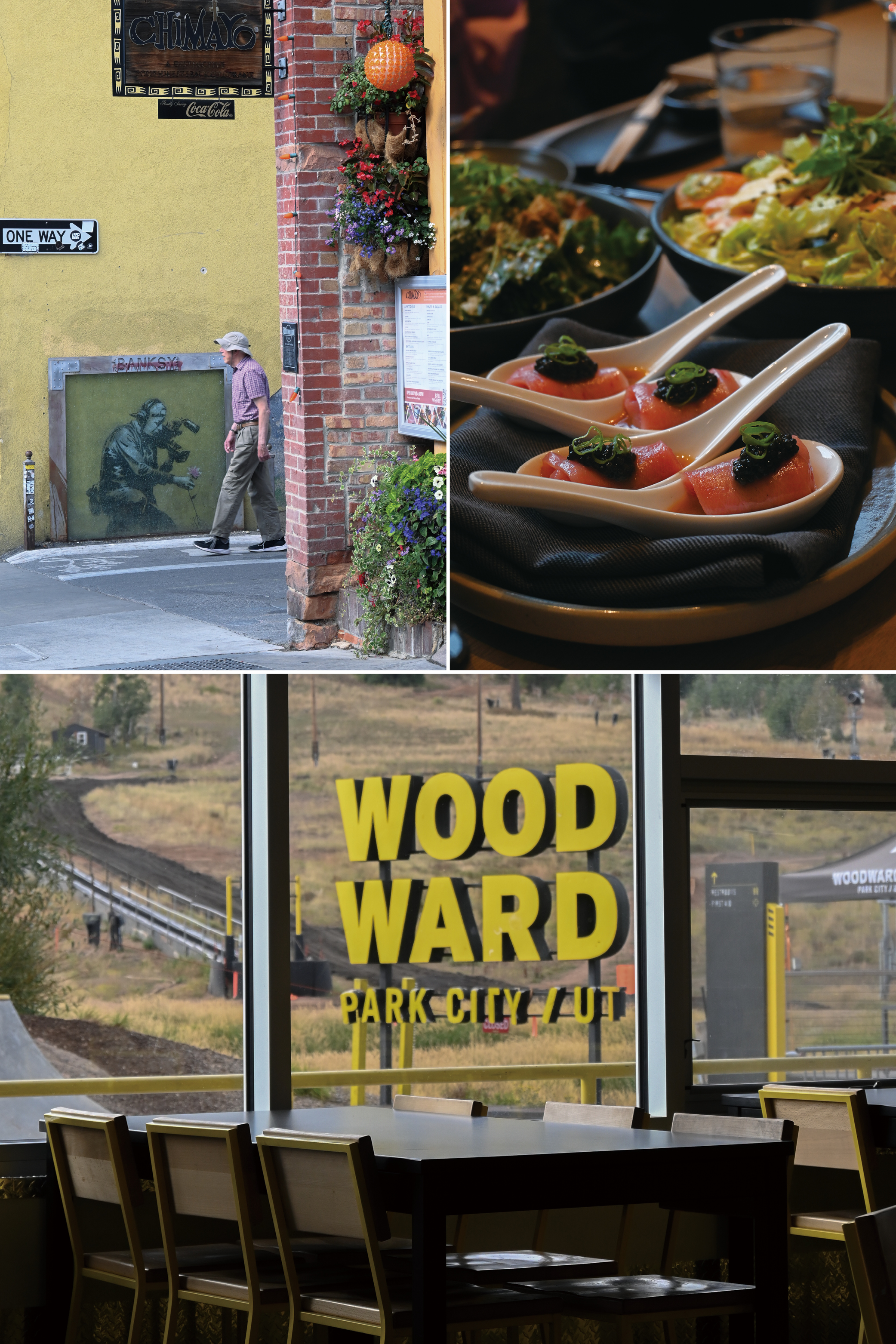
Most of the buildings on Main Street were rebuilt after the Great Fire of 1898. As Park City transformed into a tourist destination, this street, where traces of a 19th-century tourist town’s decline coexist with the vibrant 20th-century tourist scene, has been designated a National Historic Landmark. Hip shops interspersed with old buildings, and artwork like Banksy’s “Cameraman and Flowers” decorate the streets. Unlike the pace I felt while engaging in activities on the mountain during the day, I walk slowly down the street. A day in this city is completed in this way, with rapid and slow movements, rising and falling in altitude.
Festivals
you can't miss in Park City
The Sundance Film Festival
, held annually in the winter, is a world-renowned independent film festival. It features screenings of new films, meet-and-greet sessions with directors and actors, and panel discussions. In addition to the screenings, the festival also provides opportunities for direct interaction between filmmakers and audiences. The upcoming 2026 festival is scheduled to run from January 22nd to February 1st.
The Deer Valley Music Festival
features a diverse range of music, including classical, contemporary, and pop, presented by the Utah Symphony Orchestra and Utah Opera, set against the backdrop of Deer Valley Resort. A diverse mix of venues, including an outdoor amphitheater, local churches, and salons, creates a rich musical experience. Held annually from July to August, the festival offers a diverse range of performances.
The Park City Wine Festival,
held every fall, brings together wine lovers and foodies. Featuring diverse wine tastings, chef-paired dinners, and wine lectures, the festival offers a chance to experience the region's culinary culture against a beautiful mountain backdrop. In 2026, the festival will be held in Canyon Village from April 9th to 11th.
Park City Kimball Arts Festival
From August 7 to 9, 2026, Park City's Main Street will be transformed into a gallery district. Paintings, sculptures, and crafts by international artists will be on display, along with art workshops, street performances, and interactive booths to connect art and the public.
Spend your weekend like a local

Saturday. Indulge in local flavors.
This cozy bakery café, open weekdays
from 7:30 AM to 3:30 PM, is popular for its French pastries and brunch menu. After purchasing bread from the shop, you can sit at a street-side table and enjoy it with coffee. It's the perfect place to plan your day over a sandwich and coffee. On Saturday mornings, a farmers' market is held in downtown Pioneer Park. Locally harvested fruits, vegetables, eggs, honey, and even homemade bread are available for purchase. Open daily from 8:00 AM to 2:00 PM from June to October, and from 10:00 AM to 2:00 PM from November to April.
Locals often escape the urban jungle of Salt Lake City on weekends
and head to Park City, a 40-minute drive away. Park City's Main Street offers something for every traveler, from galleries showcasing local artists' work to outdoor brands selling Park City merchandise and bars serving local spirits. The Egyptian Theatre, a landmark venue that opened in 1926, hosts films, plays, and jazz performances, and is also a featured screening venue for the Sundance Film Festival.
During evening
ski season, Park City attracts skiers from around the world, and as befitting a city, it boasts a multicultural array of restaurants. KITA at Pendry Resort offers modern Japanese cuisine and steak. Led by a Korean-American chef, the steak menu is intriguing, inspired by ssam (Korean wraps). Grub Steak Restaurant is a 40-year-old Western-style steakhouse. Enjoying a steak by the fireplace will make you feel like a cowboy. Bison steak is also available, and while it's a bit rougher than regular beef, it boasts a rich, meaty flavor.
Sunday. Rest in the movement
If you've stayed at the resort for the morning
, you can enjoy a quick brunch at the on-site restaurant. Glitretind, the restaurant at Stein Eriksen Lodge, a luxurious mountain lodge nestled in beautiful mountain scenery, offers a Sunday brunch every Sunday. Enjoy fresh seafood and fruit in a Norwegian mountain lodge-like setting. If you're looking to digest your meal, Woodward Park City, which opened in 2018, is the perfect place. In the summer, it offers downhill mountain biking, while in the winter, you can ski, snowboard, and tubing. The approximately 6,000-square-meter indoor space features activities for all ages, including a gymnastics zone with elastic mats and a space for practicing skateboarding skills.
On your way back from Park City to Salt Lake City in the afternoon
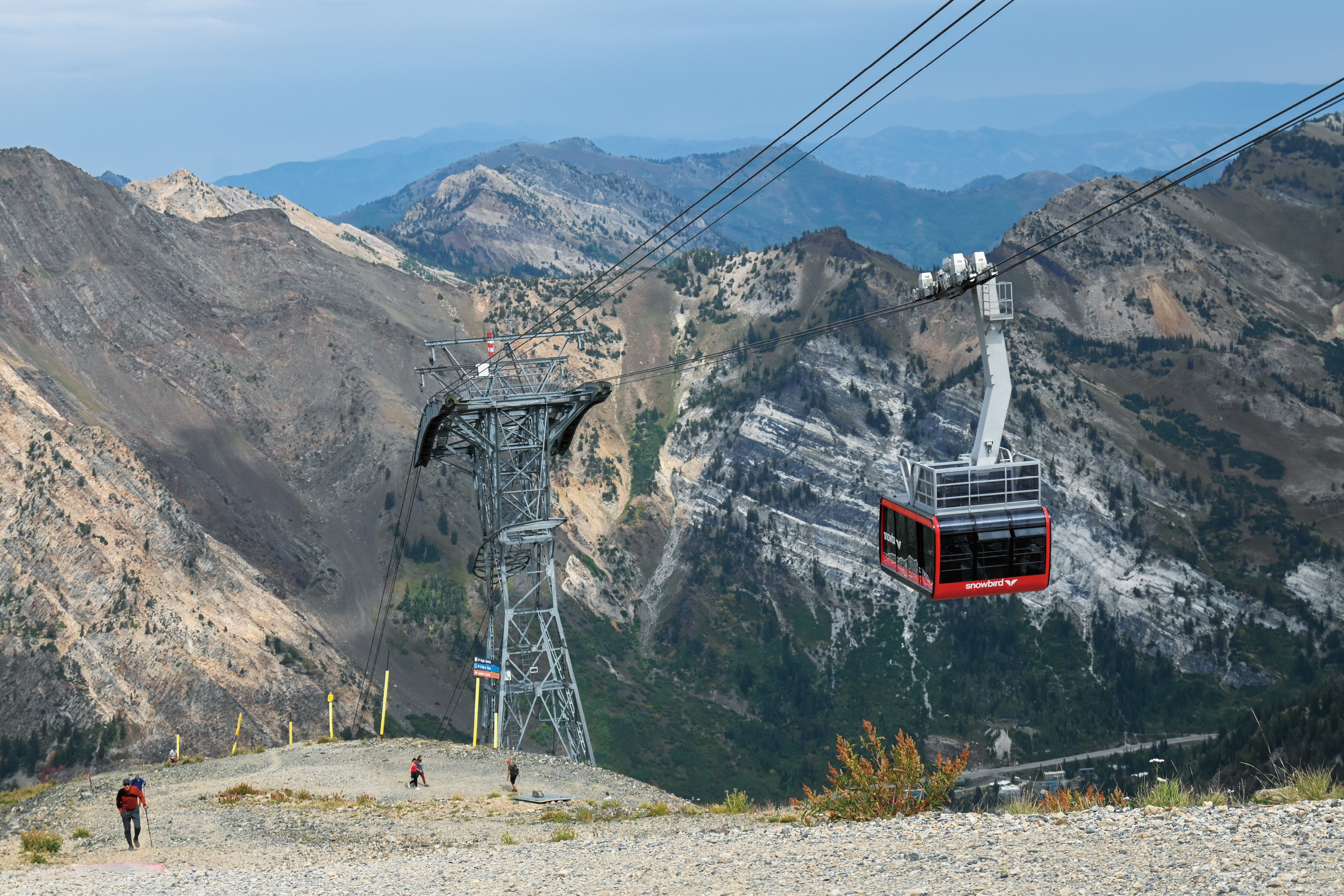
, stop by the Snowbird Resort in Cottonwood Canyon. While famous for its skiing and snowboarding, the highlight is Hidden Peak, a 3,350-meter peak accessible by cable car. From the summit, you'll be rewarded with panoramic views of the autumn foliage-covered mine and the city beyond. Many hikers also enjoy the well-maintained hiking trails. After your hike, return to the resort building and indulge in a spa treatment at The Cliff Lodge. Even non-guests can enjoy the rooftop pool and sauna. Every weekend from August to October, the resort hosts an Oktoberfest, where you can watch performers in traditional German attire like lederhosen and sample German dishes like lager and pretzels.
In the evening,
you can satisfy your hunger at one of Salt Lake City's unique culinary delights. Just outside the city lies the very first KFC. Opened in 1952, it was the first KFC opened by KFC founder Colonel Sanders at the age of 65. The restaurant resembles both a restaurant and a museum dedicated to the brand, decorated with Sanders's signature white suit, photos from his time, and memorabilia like T-shirts. When enjoying your chicken, be sure to follow the local tradition and pair it with gravy and mashed potatoes. If you're craving Korean food, Cupbop, a Korean restaurant franchise that originated in Salt Lake City and has since expanded across the United States, is a great option. Simply choose your choice of chicken, pork, or beef to top your rice with, and choose your level of spiciness. There's even a branch in the home stadium of the Utah Jazz, a professional basketball team, making it a great way to experience local flavor while savoring Korean cuisine.
TRAVEL WISE
On June 12, Delta Air Lines
launched a new route between Incheon International Airport (ICN) and Salt Lake City International Airport (SLC). This route provides domestic and Asian travelers with more convenient access to Delta's extensive network, including the western highlands and the Southwest. Delta, the most awarded airline in the United States, offers passengers a comfortable and relaxing trans-Pacific journey. Passengers on this route will experience Delta's state-of-the-art Airbus A350-900 aircraft and the latest premium cabin service, including the highest-end Delta One cabin, the premium economy Delta Premium Select cabin, the more spacious Delta Comfort+ cabin, and the standard Delta Main cabin.
The Incheon-Salt Lake City route will operate three times a week (Tuesdays, Fridays, and Sundays) from October 25 to March 28, 2026, with a schedule change in the summer. The flight departs Incheon International Airport at 7:40 PM and arrives at Salt Lake City International Airport at 4:00 PM local time. The return flight departs Salt Lake City International Airport at 11:40 AM on Mondays, Thursdays, and Saturdays and arrives at Incheon International Airport at 3:20 PM the following day.
ko.delta.com/kr/ko
Comfortable Travel and Relaxation:
Salt Lake City Airport is one of Delta Air Lines' major hubs, operating more flights from the airport than all other airlines combined. The addition of the Incheon-Salt Lake City route further solidifies its industry leadership. Delta
operates more than 260 peak-season flights to over 90 destinations worldwide, as well as nonstop flights to various international cities such as Amsterdam, London, Paris, and Mexico City. Customers traveling from Seoul to Salt Lake City also enjoy convenient, one-stop connections to over 35 destinations within the United States.
Delta's presence in Salt Lake City is further strengthened by continued investment in airport infrastructure. In 2020, Delta unveiled Concourse A, a 25,000-square-foot (80,000-square-foot) facility featuring 50 Delta boarding gates and 19 new dining and retail spaces. Delta plans to open more gates by 2027, making the Salt Lake City hub a premier domestic and international destination. Travelers visiting Salt Lake City can enjoy Delta's top-notch amenities, including the Delta Sky Club, a 2,500-square-foot lounge. The Sky Deck, an outdoor terrace space, boasts panoramic mountain views and a 360-degree fireplace, offering a relaxing retreat before embarking on their journey to Seoul.
Best Time to Travel:
If you avoid the extremely hot and dry midsummer, Salt Lake City generally enjoys a pleasant climate. Spring and fall offer mild temperatures. Winters are chilly, with average temperatures below 8°C (45°F), but the abundant snow makes for excellent skiing and snowboarding. The Bonneville Salt Flats also fill with water during the rainy season, creating beautiful scenery.
For more information,
visit Salt Lake Tourism at visitsaltlake.com or
visit the U.S. Tourism Board at gousa.or.kr.