

Plan a Visit to Salt Lake City for an Inside Look at the Historic Temple Renovation

William Jones
Contributor
July 30, 2026, 1:21 p.m. ET
Named one of Travel + Leisure’s top cities to visit, Salt Lake City serves as a launchpad to Utah's five distinctive national parks, as well as mountain towns like Park City where travelers head in both winter and summer for skiing and mountain biking. In addition to the state’s natural wonders, the city is known as the headquarters for The Church of Jesus Christ of Latter-day Saints.
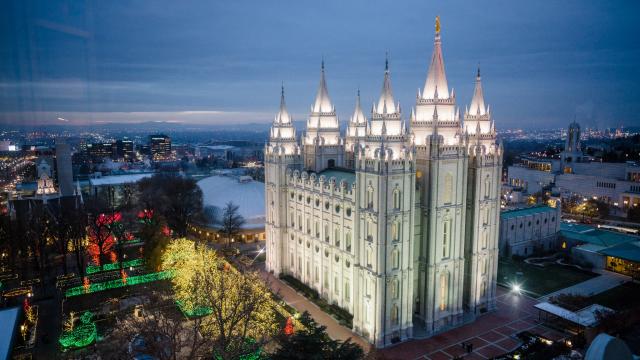
For more than 130 years, Temple Square has been a prominent stop for many visitors to Salt Lake City. The granite spires of the Salt Lake Temple dominate the Salt Lake City skyline as an enduring part of the city’s pioneer history. Dedicated in 1893 after a 40-year construction period, the Salt Lake Temple has been open only to members of The Church of Jesus Christ of Latter-day Saints since its dedication.
In April 2027, the doors will open to welcome the public for the first time in over a century.
Adding to the already strong allure of Salt Lake City as a destination, the Church will launch the Salt Lake Temple Celebration, a six-month public open house running through October 1, 2027, when the doors of this sacred landmark will welcome visitors of all faiths and backgrounds to step inside and experience its historic beauty firsthand.
According to Visit Salt Lake, the event is expected to draw several million visitors, and a reservation system will launch on September 1, 2026, to allow travelers, historians, architecture enthusiasts, and the curious alike to secure their timed-entry reservations in advance for this notable cultural event.
A Look at Pioneer Craftsmanship
The temple's walls, which were up to eight feet thick, were built from enormous blocks of quartz monzonite, a granite-like stone that was transported to the location by rail and then oxcart from neighboring Little Cottonwood Canyon. The pioneers' profoundly religious worldview was reflected in the elaborate symbolic themes, such as sun, moon, and star stones, that were carved into the outside stonework.
The current multi-year refurbishment, which started in late 2019, is a painstaking attempt to thoroughly modernize the interior facilities both aesthetically and operationally while paying tribute to the original 19th-century elegance. In order to ensure that the pioneer heritage will continue to be vibrant and intact for centuries to come, highly skilled artisans have spent years restoring some of the rooms and interior elements, including paintings, furniture, light fixtures, textiles, and original hand-carved decorative woodwork.
Historic stained-glass windows were carefully conserved and restored by specialists. The renovation also includes newly commissioned figural stained-glass windows for the new entrance buildings. Produced using traditional craftsmanship and hand-painted techniques, the windows illustrate scenes from the life of Jesus Christ while reflecting the style of the temple's historic stained glass.
The historic oak entry doors, featuring intricate circular patterns, have been carefully restored and recently reinstalled in June, a symbol of the meticulous preparation to reopen to the public in 2027.
The underground addition to the temple has an additional 100,000 square feet.
"Salt Lake is ready to welcome the world," said Kaitlin Eskelson, President and CEO of Visit Salt Lake. Ryan Mack, Visit Salt Lake Chief Communications & Experience Officer, described the Temple Square Celebration as an opportunity for millions of visitors to take a rare look inside a major historic landmark in the American West and to discover the rest of “America’s Mountain City.”
21st-Century Seismic Engineering

One of the most complex aspects of the renovation has occurred almost entirely out of sight, beneath the building's immense 185-million-pound frame. Salt Lake City sits along the Wasatch Fault zone, making the unreinforced masonry of the temple highly vulnerable to seismic activity.
To prepare the temple for seismic activity without compromising the fragile stone foundation, engineers constructed new seismically designed concrete footings—six feet thick and 20 feet wide—alongside and beneath the historic foundation. Crews used a precise “jack-and-bore” method to install 96 heavy steel pipes, ranging from 20 to 40 feet long and four feet in diameter, which were reinforced with rebar and filled with high-strength concrete to form a structural support network.
On top of these new footings, engineers installed 98 massive base isolators, each capable of supporting millions of pounds. Above the isolators, transfer girders measuring approximately 15 feet tall and 15 feet wide encase the original temple footings, merging the historic and modern foundation systems. During a major earthquake, the isolators allow the ground to move up to five feet in any direction beneath the temple while helping the historic structure remain stable.
To complete the system, structural steel trusses were carefully woven into the roof, and vertical post-tensioning cables were threaded through every column, the north and south walls, and the temple towers, tying the entire granite structure into a single cohesive and resilient unit.
A New Chapter for Temple Square
The reopening of the temple coincides with a broader reimagining of the surrounding five blocks that encompass Temple Square. Central to this enhanced guest experience is the brand-new, state-of-the-art Temple Square Visitors’ Center, officially opened in May 2026.
The new Visitors’ Center was designed to give global tourists a deeper understanding of what happens inside Latter-day Saint temples around the world, and why these buildings are considered deeply sacred spaces for their members. The center features interactive exhibits, historical artifacts, and detailed architectural models that break down both the role of temples in Latter-day Saint history and the seismic engineering required to preserve the campus.
Whether you are drawn by the history, the pioneer architecture, or the modern engineering behind the renovation, the 2027 Salt Lake Temple open house offers a memorable encounter with living history.
If You Go:
- What: The Salt Lake Temple Public Open House (Salt Lake Temple Celebration)
- When: April 5, 2027 – October 1, 2027
- Where: Temple Square, Salt Lake City, Utah
- Reservations: Free timed-entry tickets can be reserved online starting September 1, 2026. Early booking is highly recommended due to high demand. Reserve tickets at TempleSquare.org.
- Family- and accessibility-friendly: the open house will include accessible routes and family resources; check TempleSquare.org for details