

Delta Center: Salt Lake City's Home for the Jazz and Mammoth
Delta Center, home to the Jazz and Mammoth: Capacity, Ownership, History, Renovation and more
Find Local Events
by Ripunjay Gaba | Nov 12, 2026 | 8 min read

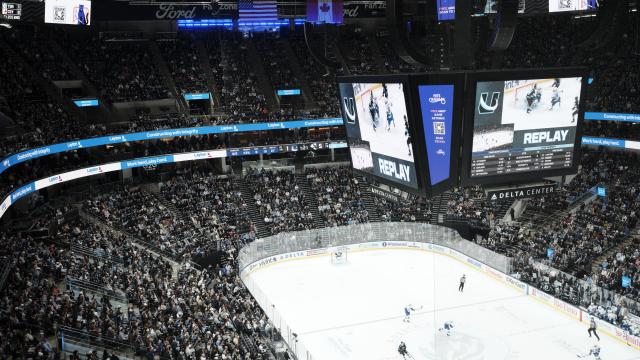
The Delta Center at 301 West South Temple is the home of the NBA's Utah Jazz and the NHL's Utah Mammoth. It opened in 1991 as the Jazz's permanent home, went through three names and returned to its original one in 2023. It is now in the middle of a multi-year rebuild to turn a basketball building into a true dual-sport arena.
Find Local Events
History & Background
As per sources, the arena was planned as a 20,000-seat replacement for the 12,616-seat Salt Palace, privately financed by Jazz owner Larry H. Miller. Ground was broken on May 22, 1990, and the cost was $93 million. It was completed on October 4, 1991, though one entry lists October 9. The first game, a Salt Lake Golden Eagles loss to the Peoria Rivermen, came on October 16, and the Jazz played their first regular-season game on November 7, 1991, a loss to the Seattle SuperSonics.
Delta Air Lines held the naming rights when the arena opened. The name changed to EnergySolutions Arena in 2006 after Delta declined to renew, then to Vivint Smart Home Arena in 2015 under a ten-year deal and Vivint Arena in 2020. Delta returned on July 1, 2023, after 17 seasons apart, which the airline called the first naming-rights partnership re-established in sports history. Financial terms were not disclosed.
Find Local Events

The building hosted figure skating and short-track speed skating at the 2002 Winter Olympics under the name Salt Lake Ice Center because of sponsorship rules, and the NBA All-Star Game in 1993 and 2023. It is expected to host ice hockey at the 2034 Winter Olympics. A 2008 Sports Illustrated players' poll called it "the most intimidating arena in the NBA", and fans know it as the "Decibel Center".
Capacity & Amenities
Capacity is in flux. As per sources, the pre-renovation numbers were 18,186 for basketball and 20,000 for concerts. The arena's operator listed 18,206 for the Jazz before the work, while the Deseret News reports an official 17,867 for the 2026-27 season. The Jazz have sold out every game since December 7, 2017, as per sources. For hockey, Smith Entertainment Group (SEG) listed about 11,131 seats before the renovation and 12,478 full-view seats for the 2025-26 season, with a goal of about 17,000.
As per sources, the building has 56 luxury suites and 668 club seats. The Black Desert Club on Level 2 was fully remodelled in 2025, and Delta's naming deal brought a redesigned Delta Sky360 Club. The arena welcomes more than 1.8 million guests a year, according to SEG.
On the food side, new options include Banbury Cross Doughnuts shaped like a Jazz note and a Mammoth ice cream sundae from Salt City Honey House, a Mammoth-size pretzel from Dangerous Pretzels, and the Hat Trick Burger from Proper Burger, as per SEG.
Team & Ownership Context
Ryan Smith owns the arena, which his Smith Entertainment Group operates, as per sources. SEG owns the Jazz and bought the former Arizona Coyotes franchise in 2024. It became the Utah Mammoth and made the Stanley Cup Playoffs in its second season, per the Deseret News. As per sources, the team played its first home game in Salt Lake City on October 8, 2024, before 16,020 fans.

Public money is involved. As per sources, a 0.5 cent sales tax lets the city divert $900 million over 30 years, with $525 million earmarked for arena upgrades. SEG has agreed to pay up to $125 million if either team leaves in the first 15 years, with penalties dropping by about $16 million a year after that. SEG is also leading a roughly three-block downtown district with a residential tower, a hotel and a Live Nation music venue, aimed to finish just before the 2034 Olympics.
Renovation Details
The arena was renovated in 2016-17 for about $125 million, finishing in fall 2017, as per sources. A summer 2024 phase for the hockey team added a new NHL home locker room, visiting locker rooms, a team tunnel, new lighting, larger broadcast platforms, a bigger team store and renovated courtside suites, according to SEG.
The current project began in April 2025. Phase one installed a retractable riser system that handles a nearly 12-foot gap between rink and court end lines, lengthened the bowl by 12 feet at each end and raised the floor two feet for a new ice slab. It added more than 1,100 lower-bowl seats, including a section behind each goal that Mammoth president Chris Armstrong called "the steepest pitch in hockey, for sure". Restroom capacity rose 12% and four dehumidifiers were added to protect the ice.
The second phase, after the 2025-26 season, rebuilt the north end with terrace-style seating and a 450-stall parking structure. SEG says suspended gondolas on both sidelines will give more than 200 fans an overhead view of the floor. The final phase, in summer 2027, will rebuild the south end with a sloped design connecting the upper and lower levels and renovate suites on Level 4, with an exterior overhaul and a new entrance and plaza planned later. SEG's contractor is Okland Construction with SCI Architects, and no project budget has been disclosed.